The boundaries between disciplines aren't walls, they're bridges waiting to be crossed.
The Velcro Discovery
In the idyllic Jura mountains of 1941, Swiss engineer George de Mestral embarked on a routine hunting trip with his dog. This ordinary excursion would plant the seeds of an invention that reshaped fastening forever. Fascinated by burdock burrs clinging to his clothes and his dog's fur, de Mestral saw beyond the inconvenience. He envisioned a bridge between nature's intricate design and human innovation.
Under a microscope, de Mestral dissected the burr's structure, unraveling the secrets of their attachment ability. Through experiments, he crafted two strips of fabric—one with tiny hooks, another with loops. In 1955, he patented "Velcro," blending the French words "velours" (velvet) and "crochet" (hook).
This exemplifies conceptual blending—merging seemingly unrelated ideas (nature's burr mechanism and textile fastening) to create transformative solutions. When you connect two unrelated subjects, your imagination fills the gaps, producing ideas most people would never imagine.
The Post-it Revolution
In the late 1960s, Dr. Spencer Silver at 3M accidentally created a weak adhesive while attempting to develop a strong one. This seemingly useless discovery sat dormant, until a few years later another 3M employee, Art Fry, frustrated with bookmarks falling from his hymnbook during choir, remembered Silver's adhesive. He created removable sticky markers, leading to Post-it Notes, a revolutionary product that transformed organization and communication.
This demonstrates random stimulus: an accidental discovery or chance connection leading to revolutionary innovation. The weak adhesive had no apparent application until a completely unrelated problem (falling bookmarks) provided the perfect context for its use.
The Theory of Conceptual Blending
Developed by the cognitive scientists Gilles Fauconnier and Mark Turner, conceptual blending theory explains how elements from various scenarios undergo a "blending" process in our subconscious. This process is omnipresent in everyday thought and language, allowing us to create new meaning from disparate elements.
Although de Mestral was unfamiliar with the term, he instinctively applied conceptual blending to solve a universal problem. The essence lies in merging ideas, concepts, or methodologies that initially appear unrelated, forging innovations that challenge the status quo and contribute to making the world better.
Tarot: a Visionary Cardscape
Tarot is an intuitive art based on a deck of human possibilities, a visionary "cardscape" designed to unlock ideas, bring clarity, and explore reality in an imaginative, symbolic dimension. Conceptual blending and random stimuli form the fundamental base of tarot reading, aligning with the understanding that readings involve creative and interpretive processes.
Each tarot card represents distinct symbolism, images, and meanings—elements from different conceptual spaces. In a card spread viewed as a diagram, each position symbolizes distinct facets of a problem. By associating random cards with each position, we incorporate "random stimulus" into the reading.
The Creative Techniques at Work
This process fires up a blend of various creative techniques and cognitive processes, such as:
Conceptual Blending: Each card represents a distinct conceptual space, and combining cards in different positions blends these spaces to generate new insights.
Metaphorical Thinking: Cards are rich in symbolism. Interpretation involves metaphorical thinking, where symbols aren't taken literally but used as metaphors conveying deeper meanings.
Pattern Recognition: Readers identify recurring symbols, themes, or relationships between cards, forming cohesive narratives.
Intuition and Imagery: Reading involves tapping into intuition and relying on card imagery. Visual aspects and intuitive responses contribute to interpretation.
Analogical Reasoning: Drawing parallels between different situations, relating card symbolism to specific aspects of the querent's situation.
Creative Problem-Solving: Tarot functions as creative problem-solving, exploring different perspectives, potential solutions, and insights.
Exploratory Thinking: The process encourages exploring various angles, perspectives, and potential meanings in relation to the spread positions.
These techniques work together, making tarot reading dynamic and insightful, allowing for varied interpretations and personal connections between card symbolism and the querent's situation, unlocking holistic scenarios and alternative aspects of problems.
Breaking the Brain's Patterns
In 1949, neuroscientist Donald Hebb coined "neurons that fire together, wire together" to explain pathway formation through repetition. As the brain repeatedly engages in tasks, associated pathways become more developed, embedding processes over time.
Our brains gravitate toward the path of least resistance. Patterns become our decision-making go-to, leading to recurring familiar mistakes or repetitive, unsatisfactory relationships. The brain establishes repeatable pathways to conserve energy, extending to decision-making. Current research indicates we make thousands of daily decisions, many unconsciously.
Consequently, our thinking suffers from biases and ingrained programs—shortcuts in unconscious decision-making. This could explain why procedural thinking can fall short; our brain programs persistently run familiar patterns, yielding stale ideas and fostering herd thinking. We get "stuck" or find it difficult to cope with sudden changes.
Bridging Conscious and Subconscious
My perspective aligns with the idea that tarot doesn't predict the future; rather, it serves as a bridge between conscious and subconscious minds. Our subconscious, like "cold storage," holds vast information the conscious mind may not readily access.
Tarot readings provide unique spaces where the prefrontal cortex, responsible for analytical thinking, is momentarily distracted. This allows the subconscious to surface, like "gut instinct." Think of driving, showering, or engaging in simple tasks when your mind generates brilliant ideas. In these moments, the prefrontal cortex handles straightforward activities, granting the subconscious opportunity to be heard.
The overdriven prefrontal cortex might overlook crucial information, but the always-attentive subconscious brings it to light during distraction moments.
Tarot readings act as catalysts for this process, engaging the conscious mind with simple yet captivating tasks. By posing questions, cards create avenues for subconscious knowledge to emerge while the analytical brain is occupied. The result is a reset, allowing the conscious mind to see insights it might otherwise gloss over.
For instance, "Should I take this position?" can evoke revelations about job dissatisfaction. "Should I date this person?" might prompt reflection on personal preferences. Even decisions between companies can unveil subconscious flags about their situations, guiding more informed choices.
What We Can Explore Together
When You're Stuck in Familiar Patterns
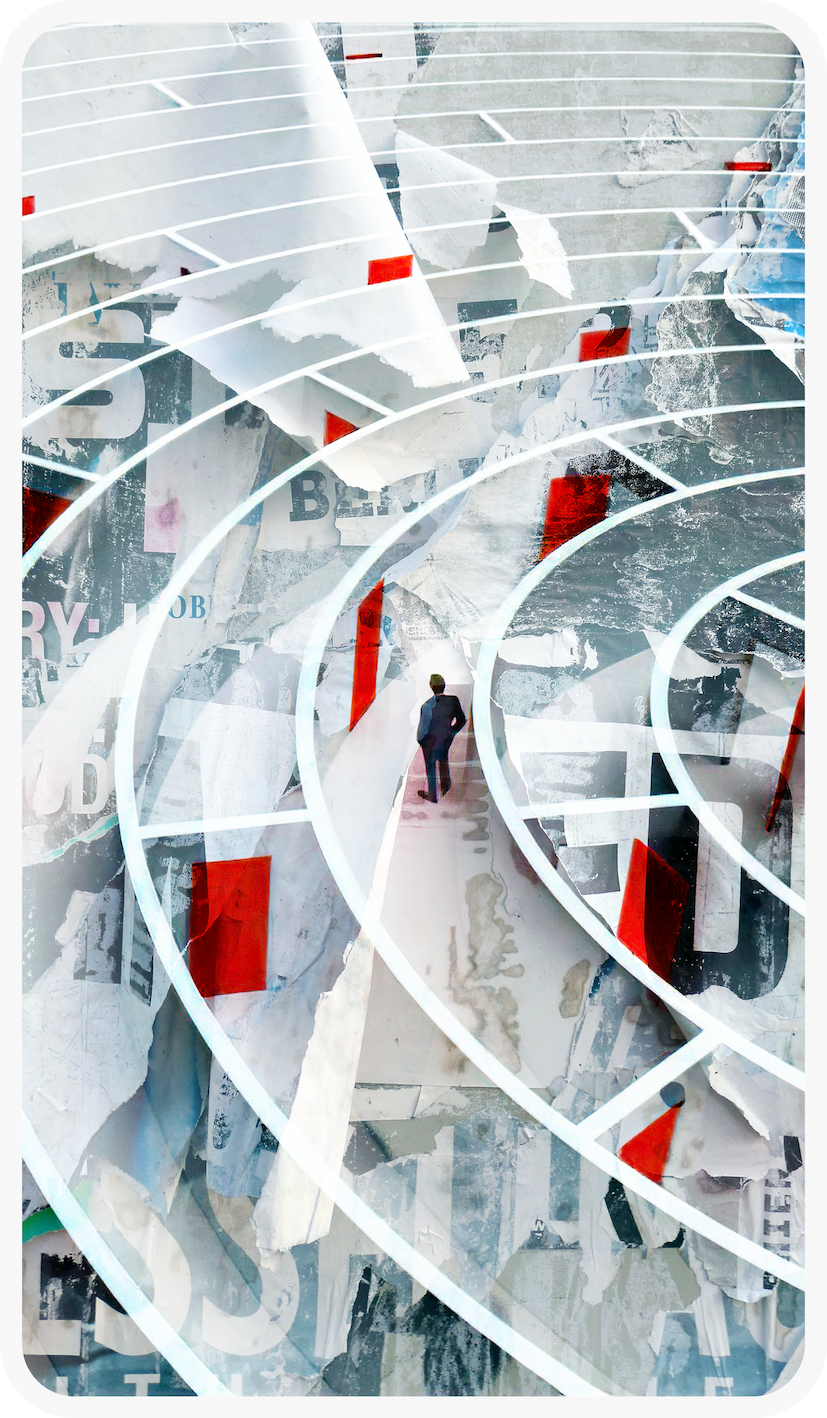
Your brain runs the same decision-making pathways because they're efficient, but efficiency isn't always wisdom. We use symbolic randomness to interrupt those patterns, surfacing what your subconscious knows but your analytical mind keeps glossing over.
When Choices Feel Overwhelming
Multiple options, competing values, unclear outcomes. We map the terrain using cards as random stimuli, examining your situation from angles your habitual thinking wouldn't consider. The goal isn't prediction, it's perspective you can act on.
When You Know Something's Off But Can't Articulate It
That "gut feeling" is often your subconscious flagging information your conscious mind is ignoring. Like insights that arrive in the shower, tarot creates space for that quieter knowledge to surface while your analytical brain is occupied with symbolic interpretation.
When Relationships Feel Confusing or Repetitive
Recurring dynamics, unclear boundaries, communication breakdowns. We examine patterns from multiple conceptual spaces; what looks one way from inside the relationship may reveal different structure when viewed through symbolic frameworks.
When You're Navigating Transition
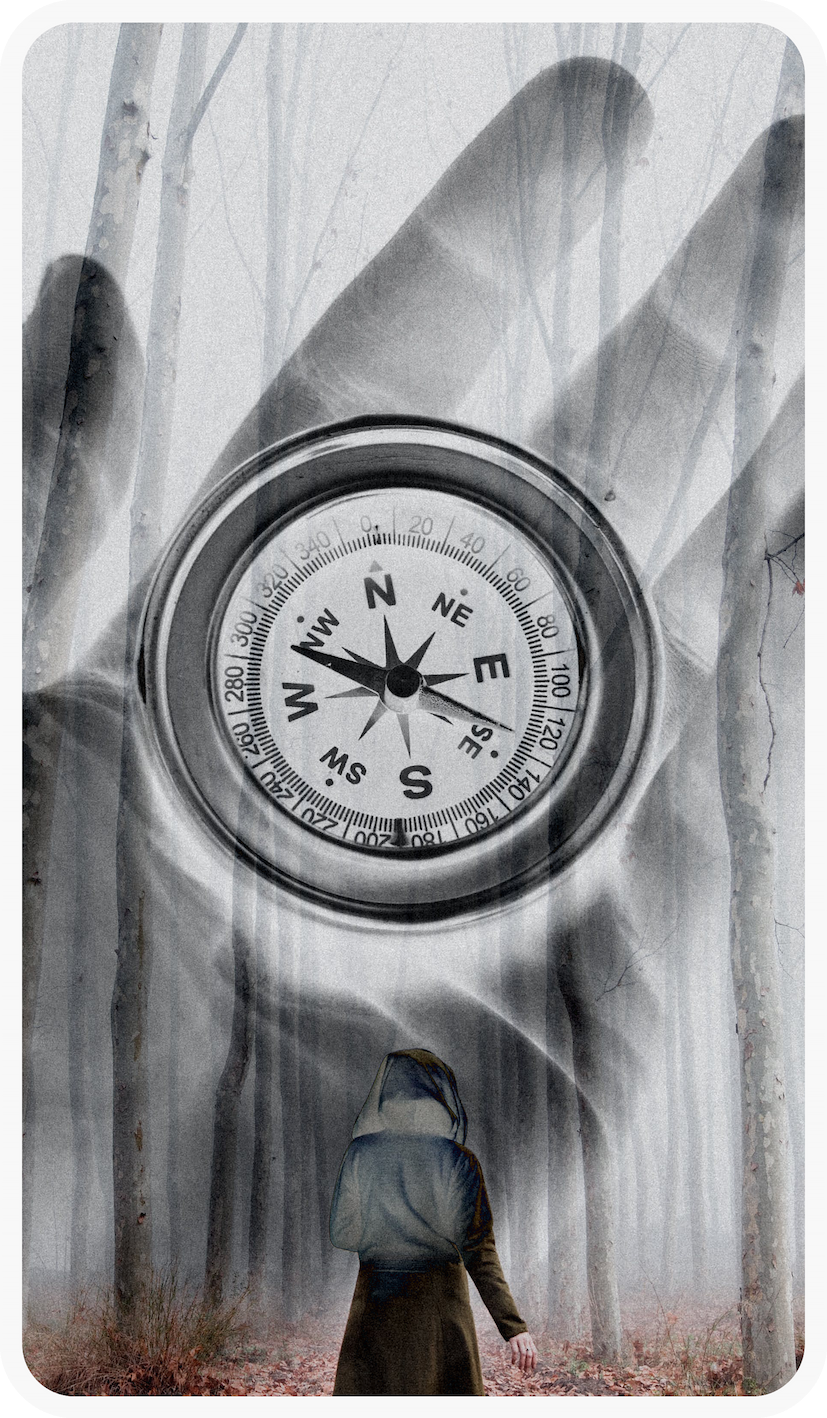
Starting something new, leaving something behind, feeling between identities. Transitions resist linear thinking. We explore what this liminal space is asking of you and what resources (internal and external) you might be overlooking.
When Creative Projects Need Fresh Eyes
Stuck on a problem, circling the same solutions, can't see past your assumptions. The cards function as random stimuli for conceptual blending, connecting your challenge with unexpected symbolic elements to generate novel approaches.
You bring the question or theme. The cards provide random symbolic prompts. Together we explore what emerges.
You leave with new perspectives, refined questions, and actionable insights. Not predictions, but material to think with.